85. Indirect electrocatalysis mediated by reactive species
Chunyu Zhang, Wei Lin and Haohong Duan*
CCS Chem. 2025, 202506198
DOI: ccschem.025.202506198

Abstract
Indirect electrocatalysis has emerged as a prevalent electrochemical technology in various small molecules conversion, offering solutions to challenges such as high overpotential, low selectivity, and electrode deactivation faced by conventional direct electrolysis. Redox mediators, acting as electron shuttles or catalytic species, play a key role in advancing indirect electrocatalytic systems. By establishing efficient electron transfer pathway and substrate activation mechanism, these species significantly enhance reaction efficiency and product selectivity. Recently, novel indirect electrocatalysis systems mediated by reactive species have been continuously established. This review comprehensively summarizes the latest advancements of reactive oxygen species, reactive halogen species, metal-based redox couples, and organic redox couples in indirect electrocatalytic transformations. Particular emphasis is placed on discussing the selection criteria, reaction mechanisms, performance optimization strategies, and practical implementation of these mediators. Finally, a roadmap for future research was outlined, highlighting the integration of in situ characterization, computational screening, reactor engineering, and sustainability assessment to accelerate the development of efficient, sustainable indirect electrocatalytic systems.


You May Also Like

82. Efficient Electrooxidation of 5-Hydroxymethylfurfural to 2,5-Furandicarboxylic Acid in a Weak Alkaline Medium Enabled by Interfacial OH− Enrichment
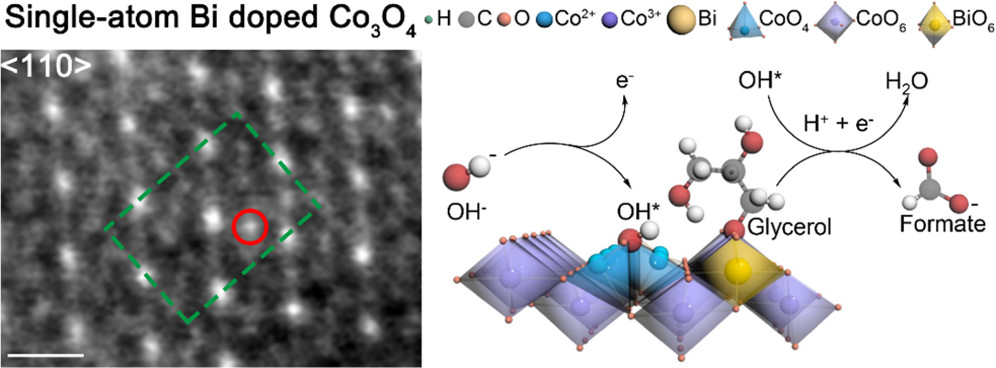
45. Efficient Electrocatalytic Oxidation of Glycerol via Promoted OH* Generation over Single-Atom-Bismuth-Doped Spinel Co3O4
