93.Electron-Efficient Formate Electrosynthesis from CO2 and Biomass-Derived Carbohydrates in a Zero-Gap Electrolyzer
Yue Ren, Ming Xu, Kang Zou, Wei Kong, Zhenhua Li, Xianggui Kong, Lirong Zheng, Zishan Han, Chunyu Zhang, Hua Zhou*, Mingfei Shao*, Haohong Duan*
Angewandte Chemie International Edition, 2026, e3951875
DOI: 10.1002/anie.3951875

Abstract
Paired electrolysis is being actively developed for co-producing valuable chemicals by leveraging electron transfer at bipolar electrodes. In electrochemical CO2 reduction to formate, if the reaction is coupled with oxygen evolution reaction, formate experiences severe crossover and oxidation to CO2 over anode in membrane electrode assembly (MEA) electrolyzer. We reported a convergent electrolysis that produces formate at bipolar electrodes by coupling CO2 reduction with biomass-derived carbohydrate (for example, glucose) oxidation, maximizing the electron efficiency toward formate (0.88 formate per e−) and suppressing oxidation of crossed formate at anode. This convergent electrolysis shows low electricity consumption for formate production (76.5 Wh mol−1 at 100 mA cm−2), lower than that of conventional CO2 reduction (180−350 Wh mol−1). Furthermore, we extended the convergent electrolysis to acetate production by coupling electrochemical CO reduction with waste polylactic acid plastic oxidation. This work offers a framework for the rational design of paired electrolysis for low electricity consumption of chemical production.


You May Also Like
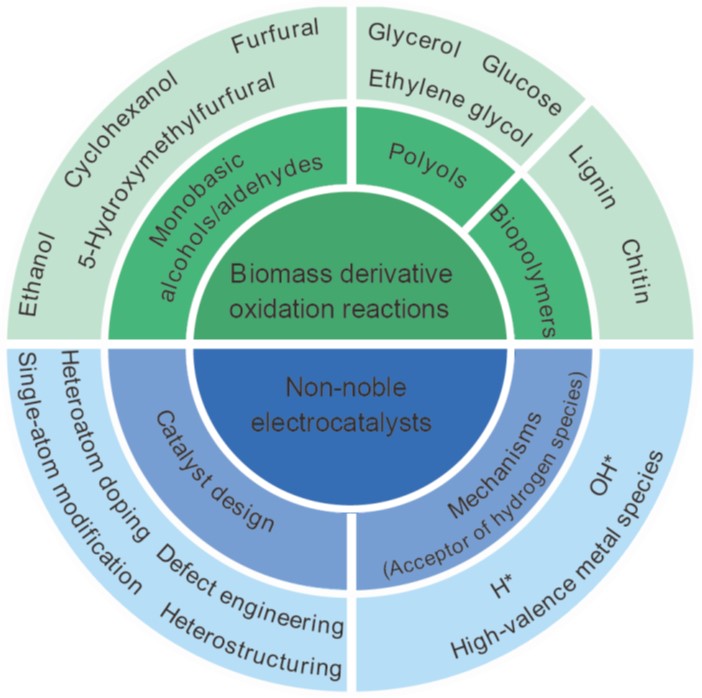
37. Recent advances on non-noble electrocatalysts for oxidative valorization of biomass derivatives
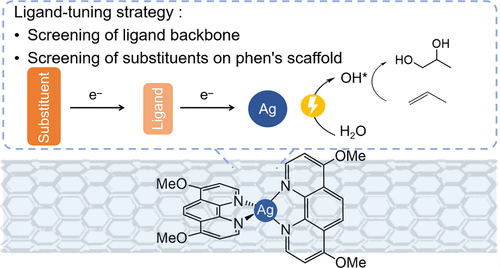
84. Ligand Tuning of Molecular Ag Catalysts Enables Efficient Direct Propylene Electrooxidation to Propylene Glycol
