99. Dynamic attraction of leached metal species enables durable glucose electrooxidation in a strong acid
Xiang Liu, Tiancong Zhou, Bo-Jun Yuan, Qiujin Shi, Peiyun Zhou, Ye Wang, Jing Li, Chunyu Zhang, Mingfei Shao* & Haohong Duan*
Nat. Commun. 2026, 17, 7159.
DOI: 10.1038/s41467-026-73501-6

Abstract
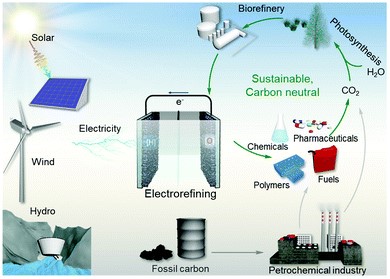
Electrooxidation of organic compounds to produce organic acid in an acidic electrolyte can circumvent product acidification step with high cost in alkaline electrolyte. However, catalysts often suffer from low stability in acid owing to severe leaching. Herein, we report a strategy to dynamically attract leached metal species to stabilize catalyst in a strong acid. In electrooxidation of glucose to formic acid over a lead dioxide (PbO2) catalyst, switching the electrolyte from HClO4 to H2SO4 reduces Pb2+ leaching by up to 30 times. As a result, a 275-hour stable performance at 1 A cm‒2 is achieved in H2SO4 (pH 0.3) using a membrane electrode assembly. Experimental evidence demonstrates that the SO42− ion attracts the leached Pb2+—generated from chemical reduction of PbO2 by glucose—by in-situ forming PbSO4 precipitate on the electrode, which is then oxidized to the active PbO2 phase. Benefiting from acidic electrolysis, we achieve raw cellulose conversion to formic acid without intermediate separation through an acid hydrolysis−electrolysis tandem process. This work demonstrates an efficient strategy to stabilize electrocatalysts that suffer from leaching issues in acidic conditions.